

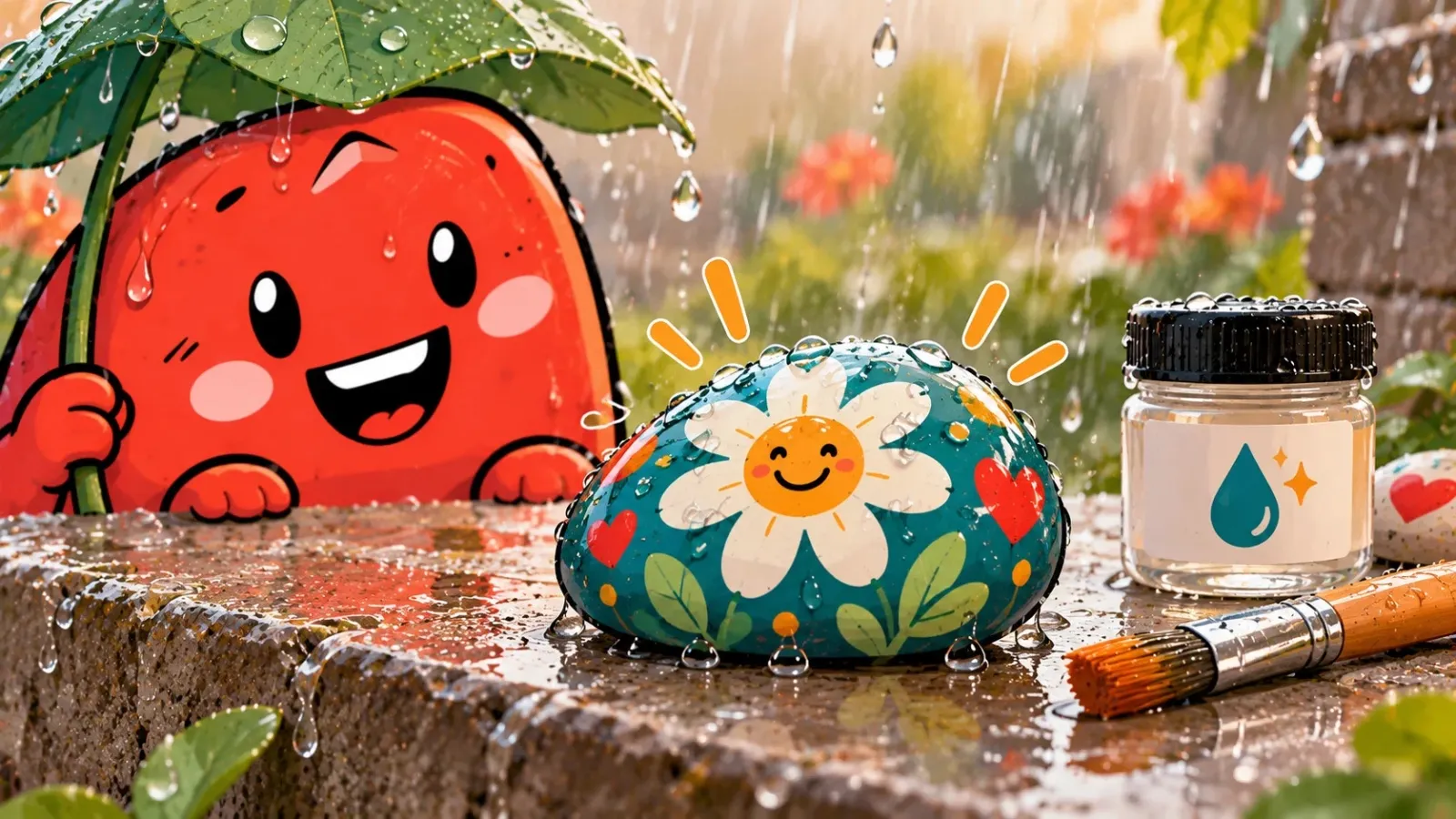
Nothing is more disappointing than a beautifully painted stone that turns into a watercolour after one shower. With the right stone, the right paint and a good coat of varnish, your design stays bright for years, even after a winter outdoors. Here is how to do it.
Start with the right stone
Choose a smooth, non-porous stone. Pebbles from the garden, a beach or a bag of decorative stones all work well. A stone that fits in your palm is big enough for a picture and a readable ID. Wash it first with water and a drop of washing-up liquid and let it dry completely, ideally overnight. A porous stone, such as sandstone, soaks up paint and makes colours look dull.
A base coat makes all the difference
First put a thin coat of white or light acrylic paint on the top. Colours look brighter on it and you need fewer coats. Let the base coat dry properly before you carry on, or the colours will run into each other. On a dark stone you can also skip the base coat and paint with bright colours instead: that contrast stands out straight away outdoors.
Acrylic paint wins
Acrylic paint sticks well to stone, covers in one or two coats and comes in every colour. A basic set from the craft shop is enough. Poster paint and watercolour wash off in the rain, and nail varnish flakes off within a few weeks. For fine lines, words and the stone’s ID, acrylic paint pens are ideal: they write like a felt-tip but stay put like paint.
Make the ID easy to read
The ID is what a finder needs to see your stone’s journey. Write it on a plain area, usually the bottom, and not too small. Mind the difference between capitals and lower case, because the ID is sensitive to it. You could add “happystone.id” as well, so the finder knows straight away where to look.
Write the ID (for example 7F2K) on the bottom with a black acrylic paint pen and varnish over it. That keeps it readable for every finder.
Varnish is not optional
Two thin coats of clear varnish protect against rain, frost and sun. Water-based varnish applied with a brush is the nicest to use indoors. Spray varnish is the quickest: spray outside, with the wind at your back and the kids at a distance. Varnish the bottom too, because that is where the ID is. Two thin coats last better than one thick one, which stays tacky for a long time.
Matt or gloss?
Both protect equally well. Gloss varnish deepens the colours and makes a stone sparkle in the sun, so it gets noticed sooner. Matt varnish gives a calm, natural look and does not show fingerprints. Pick whichever you like; what matters is that you varnish.
Let it dry, really dry
Give each coat of paint an hour and the varnish a night. In damp weather or a cold shed it takes longer. A stone that goes outside too early sticks to everything, don’t ask us how we know. An egg box or a sheet of baking paper makes a fine drying rack.
What to leave at home
Loose glitter, googly eyes, stickers and glued-on decorations come off after a while and end up in nature. If you want sparkle, use glitter paint and varnish over it. Stick to paint and varnish, and your stone is lovely for the finder and harmless for birds and hedgehogs.
So grab a smooth stone, get your paints ready and plan the varnish for tomorrow. In a few weeks your stone will be shining somewhere outdoors, and you can follow on the map who finds it.