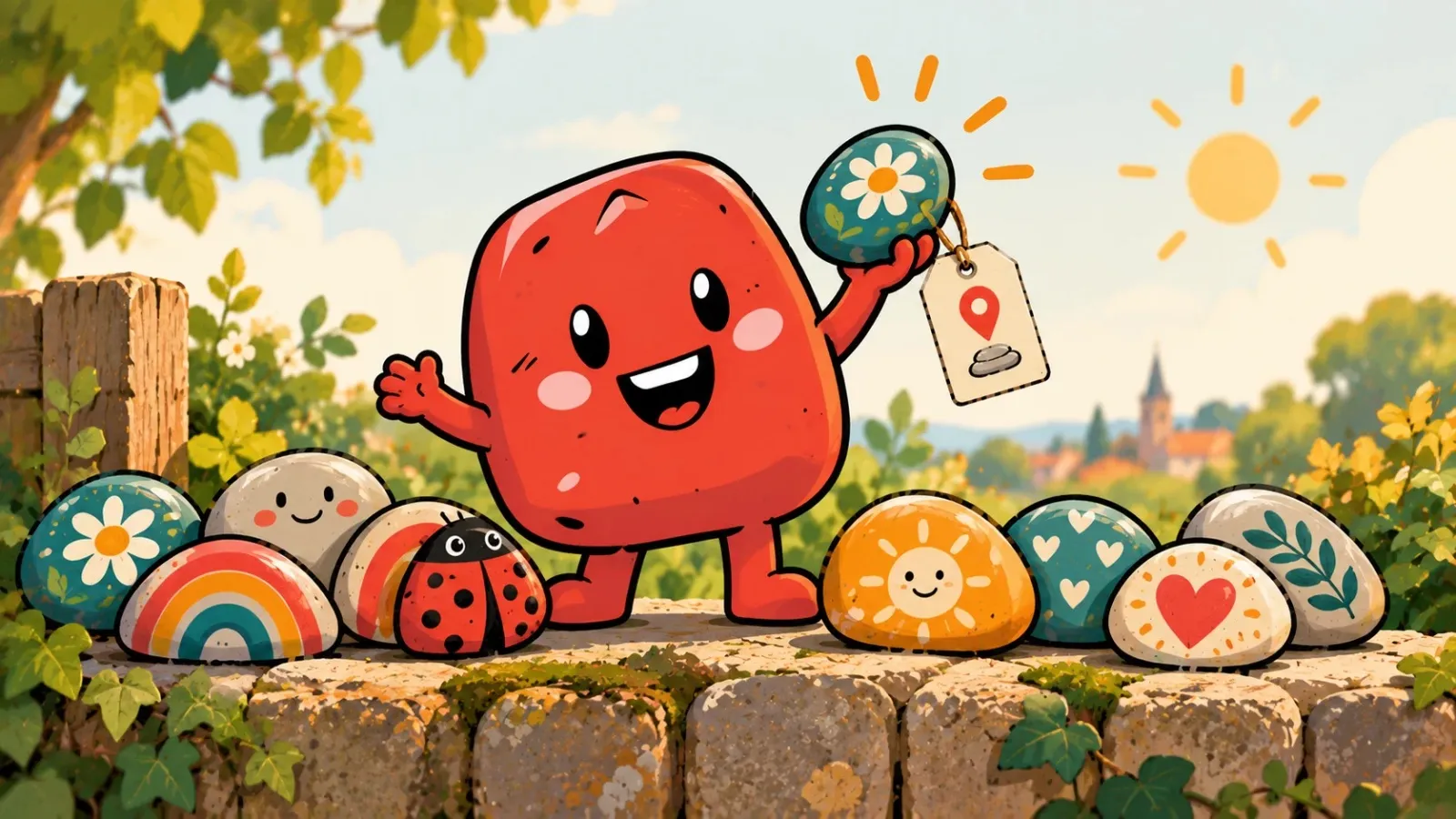

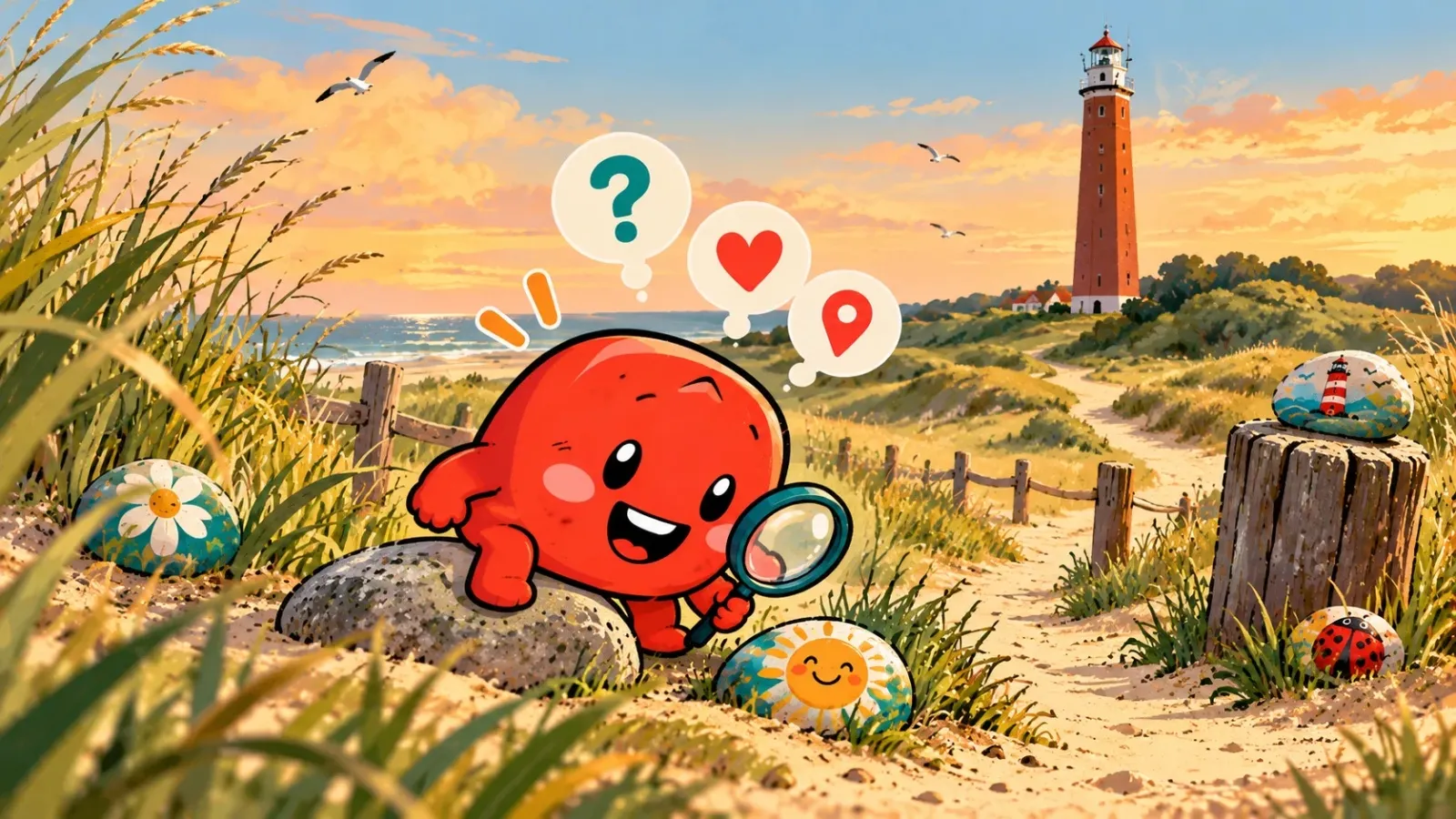
Every story starts somewhere. Ours starts on Terschelling, with a few stones that looked just a bit too cheerful to be lying there by chance.
What on earth is this?
We just came across them, painted in bright colours, with a little drawing or a short message on them. Someone had clearly put effort into them. But why were they there? Was it art, a game, a forgotten present? Honestly, we did not really know. We took them home, put them on the table and kept looking at them.
Facebook had the answer
A bit of searching on Facebook solved the mystery. They were happy stones: painted stones that people leave behind to make a stranger smile. It turned out there were groups where finders post a photo of what they have found, and makers hope their stone will turn up among them. And Terschelling turned out to be a lively place for it. Plenty of stones get hidden on the island, along the paths, by the dunes and in the village, and lots of people go looking for them.
A photo is not enough
As much fun as those groups are, one thing nagged at us. A find became a post on Facebook, and then it sank away in the timeline. Where the stone went next, nobody knew. Was it hidden again? Did someone take it home, or to the other side of the country? The maker saw one photo at most, and that was the end of the story. Yet a stone like that is actually on a journey, from hand to hand and from place to place.
What if every stone got its own history? Not one post, but a travel page that stays and grows longer with every find.
An ID as a passport
That is how the idea for Happy Stone ID came about. Every stone gets a short, unique code that you write on the bottom. Whoever finds it types in that code and sees where the stone came from and everywhere it has been. Every new finder adds a stop, with the place and the distance on the map. That turns a single find into a chapter of a story that can run for years.
Your whole collection stays yours
It turned out there was another benefit, for makers. If you paint a lot, you lose your stones, literally: they go out into the world and you never see them again. With an ID, you keep them. “My stones” shows every stone you have ever made, with its photo and its journey. Even if a finder keeps it and it stays on “Found”, you can always find it again and look at it. Your collection grows with every stone you make, and does not disappear into a timeline.
And now it is your turn
What began with a few stones on Terschelling is now a map full of stones in six languages. Free, for everyone. If you ever find a stone with a code on it, you know what to do. And if you have some paint at home: who knows where your first stone will end up.